The whole business, on one machine.
Ten areas, one person, no assigning work to anybody else. What follows is what the app does today. Where something isn’t finished it says so.
Projects that exist as folders. Tasks you type as sentences.
Every project gets a real folder tree on disk — brief, working files, deliverables. Tasks are one line: type send proofs to Harbourside friday and it reads the date and the project out of the sentence. Time tracked against a task flows into the invoice without being re-typed.
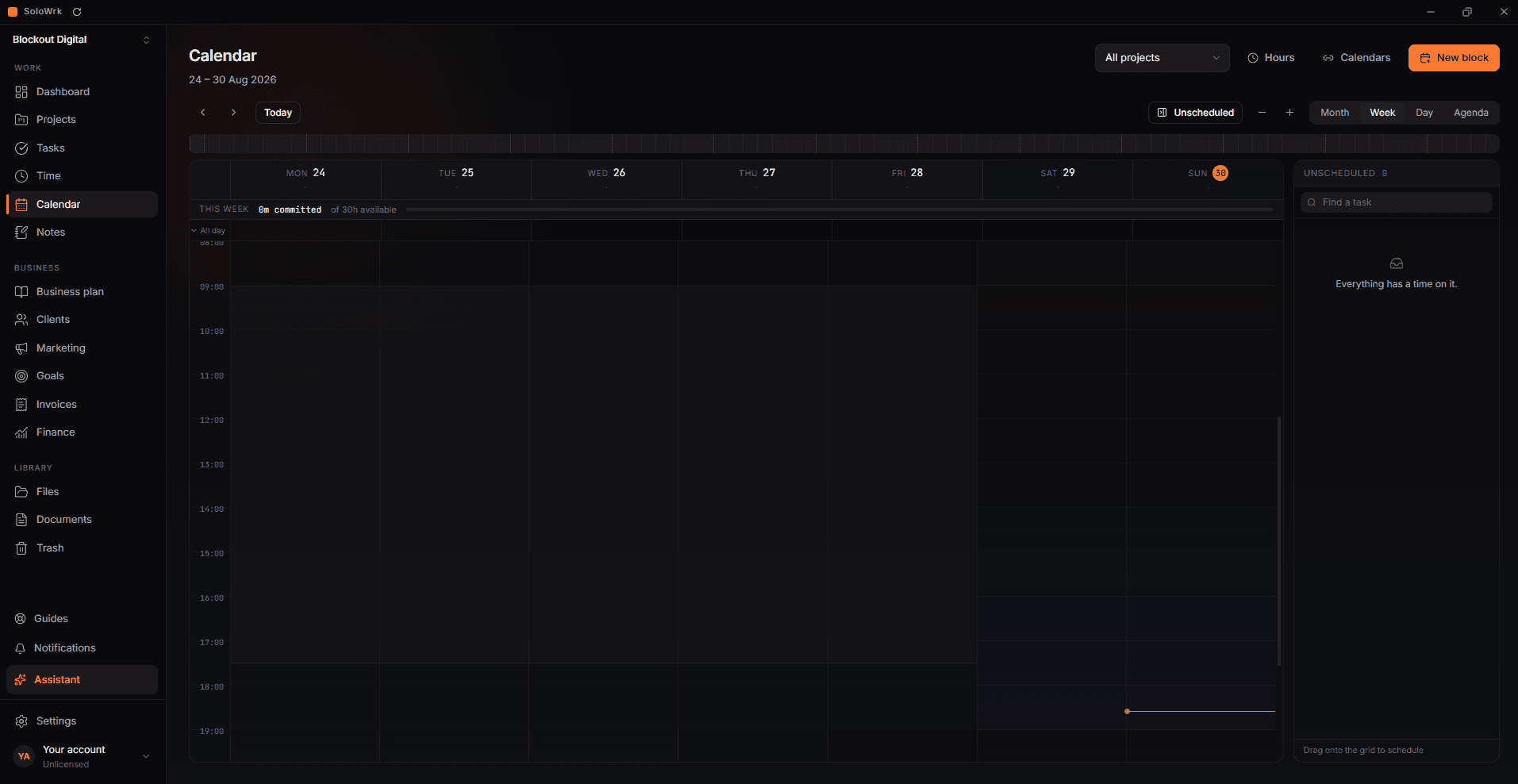
The calendar shows committed hours, not availability you wish you had. Notes are markdown files in a folder you can open in any editor.
Getting paid, and knowing what's yours to keep.
A client pipeline and contact directory. Invoices and quotes generate real PDFs into your invoices folder, with chasers for the late ones and retainers for the regular ones. Nothing is emailed to a client without you pressing send.
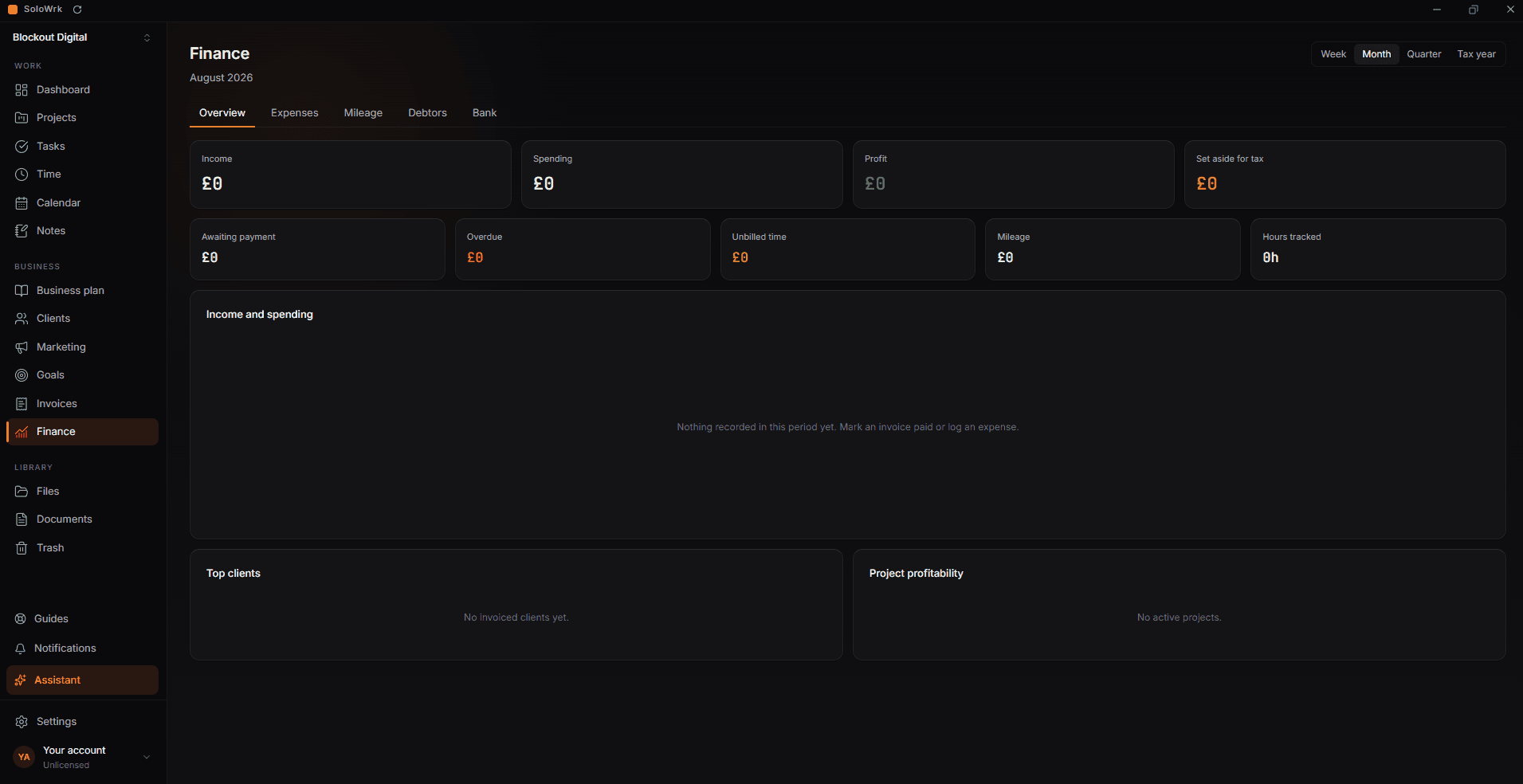
Finance takes expenses and mileage and works out the tax set-aside — the money to leave alone. Every figure comes from what you recorded. Goals measure themselves from those same numbers instead of being ticked off by hand.
A plan the app actually reads.
Attach the plan you already have and it lays out the contents and tells you what’s missing. Don’t have one? Answer plain questions and it writes the first draft. Either way the app lays out what the plan says and what it is still missing.
Alongside it, the plan is checked against your real numbers rather than your intentions — tracked hours, invoiced work, what the year has actually produced so far. Goals read from the same figures instead of being ticked off by hand.
Five tabs, and an honest publishing step.
Say how often you intend to show up on each channel and the calendar draws the gaps. Campaigns gather posts, tasks and files in one place. Results tells you where clients actually came from, from what you told it. It will not post to LinkedIn for you — copy-to-clipboard is the entire publishing step, and the app says so rather than implying otherwise.
How often you'll show up, per channel.
The gaps between intention and reality.
Written, queued, copied to clipboard.
Posts, tasks and files in one place.
Where clients actually came from.
One folder per business. Both of them yours.
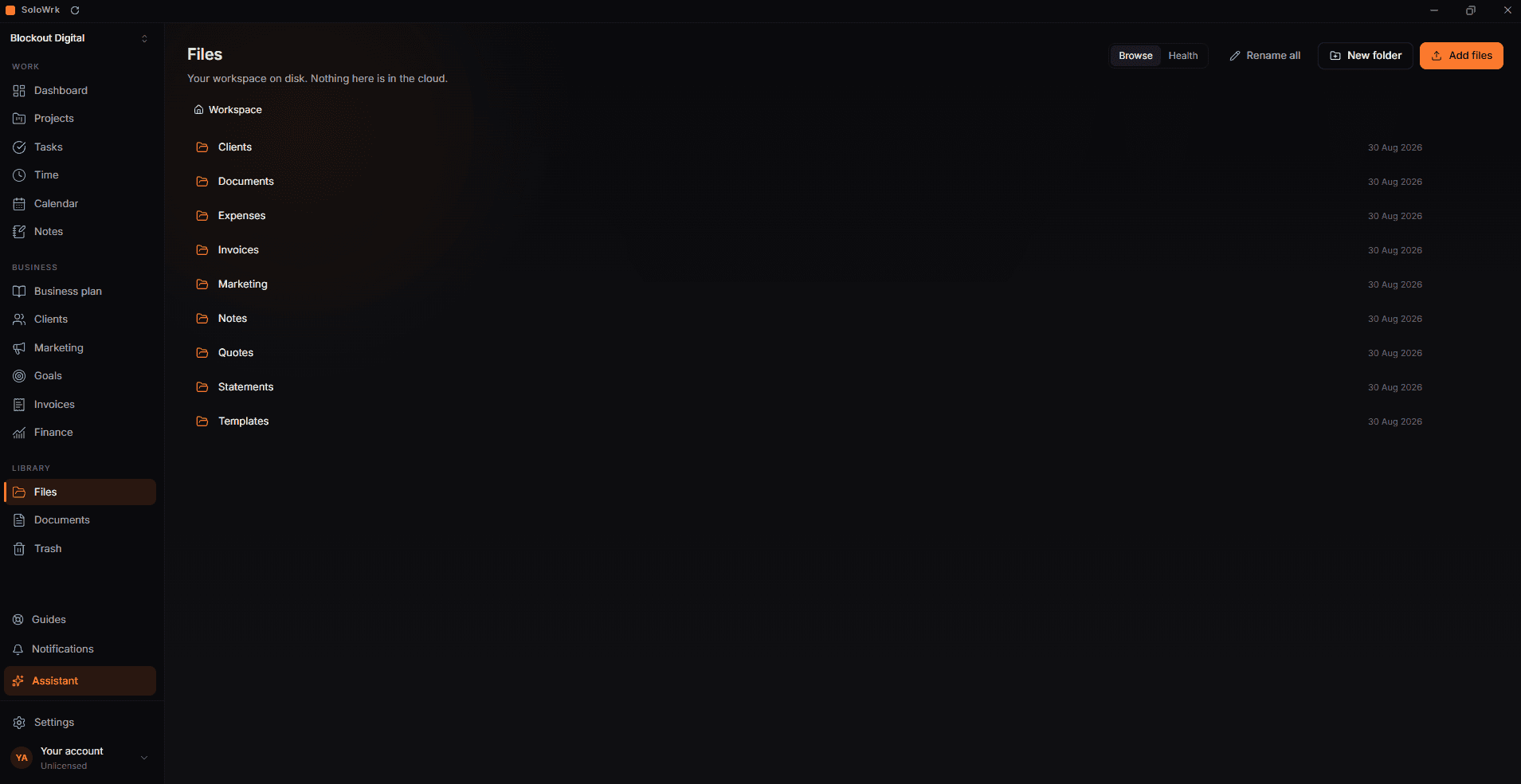
The workspace is a folder you chose, containing one SQLite database and ordinary files. Documents, invoices, notes and project files sit where you’d expect, named as you’d name them. Backing up means copying the folder.
Running two businesses means two workspaces with completely separate books — nothing bleeds between them, and switching is one menu. Pro tier.